Complete Equipment List for LPG Cylinder Repair & Refurbishment Station
06 July 2026
Complete Equipment List for LPG Cylinder Repair & Refurbishment Station
The complete equipment set is divided into seven modules by process flow: residual liquid safe treatment, cylinder valve disassembly & assembly, degreasing and paint removal heat treatment, internal & external rust removal, safety inspection, spraying refurbishment, and auxiliary supporting equipment, covering full working procedures for 15kg domestic LPG cylinders and 50kg industrial LPG cylinders.
I. Residual Liquid & Gas Safe Recovery System (Primary Explosion-Proof Procedure, Mandatory for License Application)
1. Residual Liquid & Gas Recovery Unit
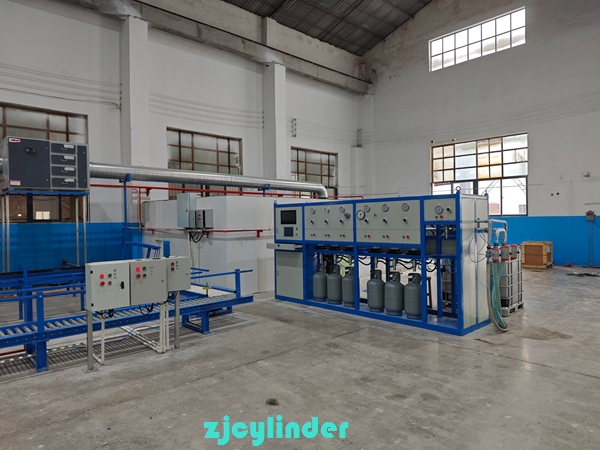
Equipped with hydrocarbon pump, oil-gas separator, sealed residual liquid storage tank and vacuum suction pipeline. It hermetically extracts residual LPG liquid and gas inside cylinders to eliminate flammable and explosive leakage, a must-have system for environmental protection and fire safety compliance.
2. Pneumatic cylinder tilting rack: tilts cylinders pneumatically to drain residual oil and water internally, matched with sealed collection pipelines.
3. Explosion-proof vacuum pump + combustible gas detector: replaces flammable mixed gas inside cylinders; valve disassembly is only allowed after internal gas concentration reaches standard. The system provides 24/7 online monitoring of gas leakage across the workshop.
4. Explosion-proof ventilation & waste gas incineration purification device: treats volatile recovered LPG to meet environmental emission standards.
II. Automatic Cylinder Valve Disassembly & Assembly Equipment (Manual Pipe Wrench Disassembly Prohibited by National Standards)
Automatic Cylinder Valve Mounting & Dismounting Machine
1. Compatible with 15kg and 50kg LPG cylinders. Adopts pneumatic torque control to avoid damage to cylinder neck threads, with a capacity of 120 cylinders per hour. Dual-function for removing old valves and installing qualified new valves.
2. Cylinder neck thread repair tap + thread plug gauge: repairs mildly corroded neck threads; the gauge verifies thread qualification.
3. Sealed waste valve collection bin: centrally stores removed old valves to prevent residual gas escape.
III. Degreasing & Paint Stripping Heat Treatment Equipment (Complete Removal of Internal Oil Stains and External Old Paint)
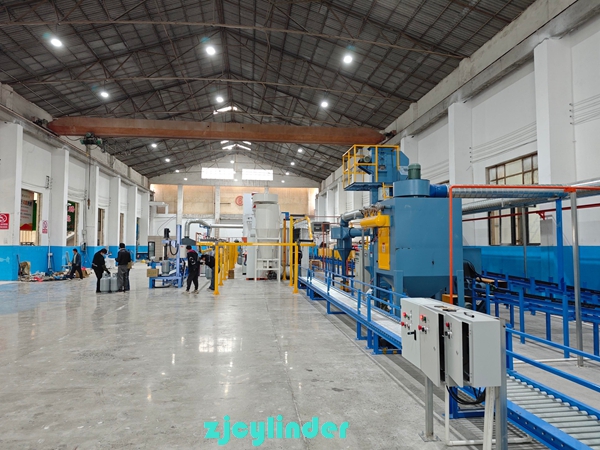
1. Continuous-through cylinder incineration furnace: low-temperature baking at 400~600℃ to burn off external old paint and internal residual grease. Matched with bag dust removal and waste gas treatment systems to prevent massive paint slag from contaminating shot blasting abrasives before rust removal.
2. Steam cleaning unit (alternative for small-scale stations): uses high-pressure steam above 0.2MPa to clean internal oil stains with open-flame-free operation, ideal for small workshops.
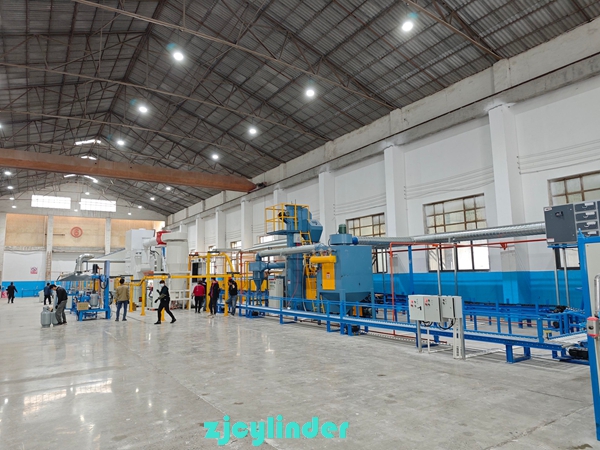
3. Roller conveyor line: runs through all procedures including incineration, shot blasting, hydrostatic testing and spraying to transport cylinders automatically.
IV. Internal & External Rust Removal Equipment (Foundation for Refurbished Appearance and Internal Anti-Corrosion Treatment)
1. Automatic cylinder shot blasting rust remover: one-step cleaning of external rust and oxide scale, equipped with pulse bag dust collectors to meet environmental dust emission standards.
2. Special internal cylinder sandblaster: stretches into cylinders for internal sandblasting to eliminate inner-wall rust and carbon deposition, preventing wall thinning caused by internal corrosion. High-pressure water cleaners may be used as substitutes for small stations.
3. Steel shot recycling circulation system and dust removal system: fully explosion-proof dust treatment to pass work safety supervision and environmental inspections.
V. Statutory Safety Inspection Equipment (Core Requirement for License Application, All Items Indispensable)
Visual Inspection & Wall Thickness Testing Instruments
1. Ultrasonic thickness gauge: measures wall thickness of cylinder barrels and heads point by point to judge scrapping due to corrosive thinning, with precision of ±0.01mm.
2. 24V explosion-proof internal inspection lamp or industrial endoscope: detects inner-wall cracks, corrosion and interlayer defects.
3. Special defect templates, depth calipers, magnifiers and try squares: measure the depth of dents, bulges and scratches to determine visual scrapping criteria.
4. Electronic weighing scale: verifies empty cylinder weight to identify excessive weight loss from corrosion.
VI. Automatic Hydrostatic Test Machine
1. Test pressure: 3.2MPa; holds pressure for 60 seconds with automatic data recording. Integrated water circulation and automatic drainage functions; the computer stores all test reports, an essential recording system for license acquisition.
VII. Air Tightness Testing Equipment
1. Immersion air tightness tester: fills cylinders with compressed air and submerges them in a water tank to observe bubbles for leakage detection on valves and welds, featuring high batch testing efficiency.
2. Cylinder valve test bench: separately tests tightness and opening/closing performance of new and used valves; unqualified valves are scrapped directly.
VIII. Scrapping Treatment Equipment
1. Cylinder baler: flattens and destroys cylinders failing wall thickness and defect inspections to prevent scrapped cylinders from flowing into the market; mandatory equipment for market supervision audits.
IX. Non-Destructive Testing (Standard Configuration for Medium-to-Large Inspection Stations)
1. Magnetic particle flaw detector: detects tiny fatigue cracks on cylinder welds and heads; optional for small simple stations as needed.
X. Complete Spraying & Refurbishment Equipment
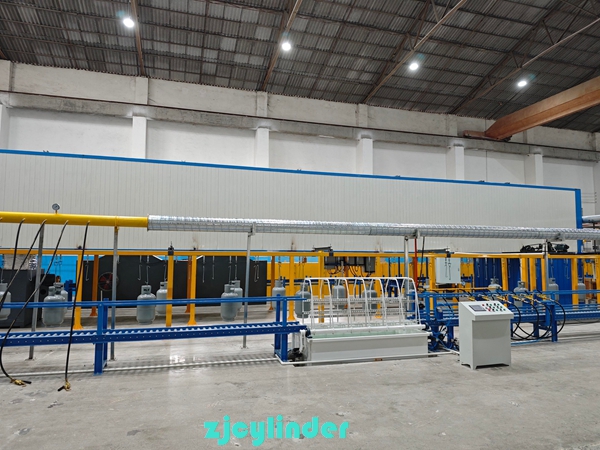
1. Electrostatic powder spraying main unit + spray booth: eco-friendly powder coating replacing liquid paint with strong adhesion and zero solvent pollution, equipped with a powder recovery system.
2. Curing oven: high-temperature baking to cure powder coatings for wear and corrosion resistance.
3. Automatic cylinder marking machine: prints traceable identifiers including inspection date, next inspection due date, station serial number and unique cylinder serial number.
XI. Public Power, Fire Protection and Auxiliary Supporting Equipment
Air Source Power System
1. Screw air compressors (0.8/10, 1.0/30): supply compressed air separately for shot blasting, hydrostatic testing and pneumatic equipment.
2. Air storage tank, refrigerated dryer and precision filters: purify compressed air to avoid water interference in hydrostatic testing and spraying processes.
Ⅻ. Fire Safety Supporting Facilities
1. Explosion-proof exhaust fans, combustible gas alarm systems, dry-powder explosion-proof fire extinguishers and containment ditches.
2. Anti-static workwear, explosion-proof tools, emergency eyewash stations and absorbent cotton for spill response.
ⅩⅢ. Conveying Auxiliaries
1. Gas cylinder roller conveyor lines, loading/unloading manipulators and turnover storage racks.
2. Storage racks for abrasives, powder coatings and cylinder valves; storage barrels for hazardous waste (waste steel shot, waste paint, waste cylinder valves).
The complete equipment set is divided into seven modules by process flow: residual liquid safe treatment, cylinder valve disassembly & assembly, degreasing and paint removal heat treatment, internal & external rust removal, safety inspection, spraying refurbishment, and auxiliary supporting equipment, covering full working procedures for 15kg domestic LPG cylinders and 50kg industrial LPG cylinders.
I. Residual Liquid & Gas Safe Recovery System (Primary Explosion-Proof Procedure, Mandatory for License Application)
1. Residual Liquid & Gas Recovery Unit
Equipped with hydrocarbon pump, oil-gas separator, sealed residual liquid storage tank and vacuum suction pipeline. It hermetically extracts residual LPG liquid and gas inside cylinders to eliminate flammable and explosive leakage, a must-have system for environmental protection and fire safety compliance.
2. Pneumatic cylinder tilting rack: tilts cylinders pneumatically to drain residual oil and water internally, matched with sealed collection pipelines.
3. Explosion-proof vacuum pump + combustible gas detector: replaces flammable mixed gas inside cylinders; valve disassembly is only allowed after internal gas concentration reaches standard. The system provides 24/7 online monitoring of gas leakage across the workshop.
4. Explosion-proof ventilation & waste gas incineration purification device: treats volatile recovered LPG to meet environmental emission standards.
II. Automatic Cylinder Valve Disassembly & Assembly Equipment (Manual Pipe Wrench Disassembly Prohibited by National Standards)
Automatic Cylinder Valve Mounting & Dismounting Machine
1. Compatible with 15kg and 50kg LPG cylinders. Adopts pneumatic torque control to avoid damage to cylinder neck threads, with a capacity of 120 cylinders per hour. Dual-function for removing old valves and installing qualified new valves.
2. Cylinder neck thread repair tap + thread plug gauge: repairs mildly corroded neck threads; the gauge verifies thread qualification.
3. Sealed waste valve collection bin: centrally stores removed old valves to prevent residual gas escape.
III. Degreasing & Paint Stripping Heat Treatment Equipment (Complete Removal of Internal Oil Stains and External Old Paint)
1. Continuous-through cylinder incineration furnace: low-temperature baking at 400~600℃ to burn off external old paint and internal residual grease. Matched with bag dust removal and waste gas treatment systems to prevent massive paint slag from contaminating shot blasting abrasives before rust removal.
2. Steam cleaning unit (alternative for small-scale stations): uses high-pressure steam above 0.2MPa to clean internal oil stains with open-flame-free operation, ideal for small workshops.
3. Roller conveyor line: runs through all procedures including incineration, shot blasting, hydrostatic testing and spraying to transport cylinders automatically.
IV. Internal & External Rust Removal Equipment (Foundation for Refurbished Appearance and Internal Anti-Corrosion Treatment)
1. Automatic cylinder shot blasting rust remover: one-step cleaning of external rust and oxide scale, equipped with pulse bag dust collectors to meet environmental dust emission standards.
2. Special internal cylinder sandblaster: stretches into cylinders for internal sandblasting to eliminate inner-wall rust and carbon deposition, preventing wall thinning caused by internal corrosion. High-pressure water cleaners may be used as substitutes for small stations.
3. Steel shot recycling circulation system and dust removal system: fully explosion-proof dust treatment to pass work safety supervision and environmental inspections.
V. Statutory Safety Inspection Equipment (Core Requirement for License Application, All Items Indispensable)
Visual Inspection & Wall Thickness Testing Instruments
1. Ultrasonic thickness gauge: measures wall thickness of cylinder barrels and heads point by point to judge scrapping due to corrosive thinning, with precision of ±0.01mm.
2. 24V explosion-proof internal inspection lamp or industrial endoscope: detects inner-wall cracks, corrosion and interlayer defects.
3. Special defect templates, depth calipers, magnifiers and try squares: measure the depth of dents, bulges and scratches to determine visual scrapping criteria.
4. Electronic weighing scale: verifies empty cylinder weight to identify excessive weight loss from corrosion.
VI. Automatic Hydrostatic Test Machine
1. Test pressure: 3.2MPa; holds pressure for 60 seconds with automatic data recording. Integrated water circulation and automatic drainage functions; the computer stores all test reports, an essential recording system for license acquisition.
VII. Air Tightness Testing Equipment
1. Immersion air tightness tester: fills cylinders with compressed air and submerges them in a water tank to observe bubbles for leakage detection on valves and welds, featuring high batch testing efficiency.
2. Cylinder valve test bench: separately tests tightness and opening/closing performance of new and used valves; unqualified valves are scrapped directly.
VIII. Scrapping Treatment Equipment
1. Cylinder baler: flattens and destroys cylinders failing wall thickness and defect inspections to prevent scrapped cylinders from flowing into the market; mandatory equipment for market supervision audits.
IX. Non-Destructive Testing (Standard Configuration for Medium-to-Large Inspection Stations)
1. Magnetic particle flaw detector: detects tiny fatigue cracks on cylinder welds and heads; optional for small simple stations as needed.
X. Complete Spraying & Refurbishment Equipment
1. Electrostatic powder spraying main unit + spray booth: eco-friendly powder coating replacing liquid paint with strong adhesion and zero solvent pollution, equipped with a powder recovery system.
2. Curing oven: high-temperature baking to cure powder coatings for wear and corrosion resistance.
3. Automatic cylinder marking machine: prints traceable identifiers including inspection date, next inspection due date, station serial number and unique cylinder serial number.
XI. Public Power, Fire Protection and Auxiliary Supporting Equipment
Air Source Power System
1. Screw air compressors (0.8/10, 1.0/30): supply compressed air separately for shot blasting, hydrostatic testing and pneumatic equipment.
2. Air storage tank, refrigerated dryer and precision filters: purify compressed air to avoid water interference in hydrostatic testing and spraying processes.
Ⅻ. Fire Safety Supporting Facilities
1. Explosion-proof exhaust fans, combustible gas alarm systems, dry-powder explosion-proof fire extinguishers and containment ditches.
2. Anti-static workwear, explosion-proof tools, emergency eyewash stations and absorbent cotton for spill response.
ⅩⅢ. Conveying Auxiliaries
1. Gas cylinder roller conveyor lines, loading/unloading manipulators and turnover storage racks.
2. Storage racks for abrasives, powder coatings and cylinder valves; storage barrels for hazardous waste (waste steel shot, waste paint, waste cylinder valves).
Station Configuration Schemes:
Full Complete Set: Residual liquid recovery unit + automatic valve dismounting machine + paint stripping incinerator + internal & external shot blasting machine + six-station hydrostatic testing machine + air tightness testing machine + powder spraying & curing line + automatic marking machine + cylinder baler + full set of inspection instruments + dust removal & environmental protection equipment.
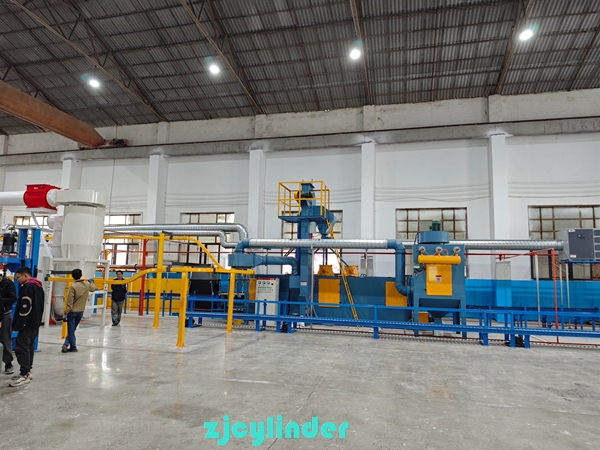
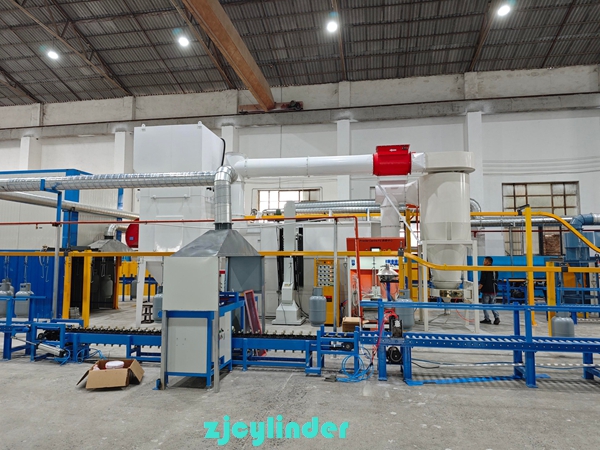
Warehousing registration of used cylinders → hermetic recovery of residual liquid & gas → automatic removal of old cylinder valves → low-temperature incineration paint stripping → external shot blasting rust removal + internal wall cleaning → visual inspection + wall thickness measurement → hydrostatic strength test → air tightness test (valve calibration) → automatic installation of new valves on qualified cylinders → electrostatic powder spraying + curing baking → laser/ink printing of inspection marks → warehousing of qualified finished cylinders; unqualified cylinders are flattened and scrapped.